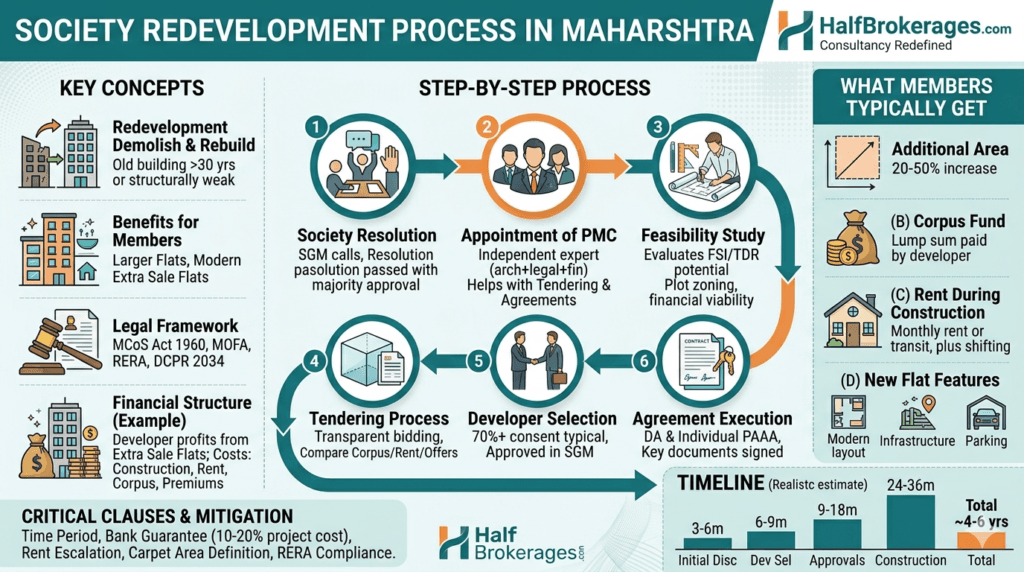
Redevelopment means demolishing an old building (usually 30+ years old or structurally weak) and constructing a new one on the same plot. Housing Society redevelopment (especially in Mumbai and across Maharashtra) is a structured but often misunderstood process. Here’s a complete, but in short explanation about the process involved and practical breakdown—from concept to execution—with the key legal, financial, and operational details you’ll need.
- What are Benefits of Society Redevelopment?
- Larger flats for existing members
- Modern amenities (lifts, parking, security, clubhouse, etc.)
- Additional sale flats (which fund the project)
- When Should a Society Consider Redevelopment?
- Building is structurally unsafe (Structural Audit Report)
- High maintenance / repair costs
- Outdated layout (no lift, no parking)
- Members want bigger homes
- Land has unused FSI/TDR potential
- Legal Framework & Key regulations: (Maharashtra Focus)
- Maharashtra Co-operative Societies Act, 1960
- Redevelopment Guidelines (GR dated 3 Jan 2009 + amendments)
- MOFA (Maharashtra Ownership Flats Act)
- RERA (Real Estate Regulation Act) – Developer must register project
- Local Development Control Regulations (DCPR 2034 in Mumbai effective from 2018)
- Step-by-Step Redevelopment Process
Step 4.1: Society Resolution
- Minimum 1/4th members request redevelopment
- Managing Committee calls Special General Body Meeting (SGM)
- Resolution passed with majority approval (typically >51%)
Step 4.2: Appointment of PMC (Project Management Consultant)
- Independent expert (architect + legal + financial)
- Helps with:
- Feasibility report
- Tendering
- Developer selection
- Agreement structuring
Step 4.3: Feasibility Study
PMC evaluates:
- Plot size and zoning
- FSI potential (base + fungible + TDR)
- Expected carpet area per member
- Financial viability
Step 4.4: Tendering Process
- Transparent bidding
- Multiple developers invited
- Comparison based on:
- Corpus fund
- Additional area offered
- Rent + deposit
- Track record
Step 4.5: Developer Selection
- Must be approved in SGM
- Usually requires 70%+ member consent (practically necessary)
- Selection criteria:
- Financial strength
- Past projects
- Delivery record
Step 4.6: Agreement Execution
Key documents:
- Development Agreement (DA)
- Individual Permanent Alternate Accommodation Agreement (PAAA)
- Power of Attorney (limited)
- What Members Typically Get
(A) Additional Area
- 20% to 50% increase in carpet area (depends on FSI)
(B) Corpus Fund
- Lump sum paid by developer
- Used by members or society
(C) Rent During Construction
- Monthly rent OR transit accommodation
- Plus shifting charges
(D) New Flat Features
- Modern layout
- Better infrastructure
- Parking (often one per flat)
- Financial Structure (How Developer Profits)
Developer earns by:
- Selling extra flats created using FSI/TDR
- Premium pricing due to new building
Costs include:
- Construction
- Rent to members
- Corpus
- Premiums (to government)
- Approval costs
- Critical Clauses to Watch (Very Important)
Time Period
- Usually 2–3 years
- Include penalty for delay
Bank Guarantee
- 10–20% of project cost
- Protects society if developer defaults
Rent Escalation Clause
- 10–15% increase every year
Carpet Area Definition
- Must be clearly defined as per RERA
Amenities List
- Clearly specified (no vague promises)
- Common Risks / Problems
- Developer delays project
- Members disagreement / litigation
- Poor agreement drafting
- Hidden FSI assumptions
- Financial instability of developer
Mitigation:
- Strong PMC
- Legal due diligence
- RERA compliance
- Bank guarantee
- Timeline (Realistic)
Stage | Time |
Initial discussions | 3–6 months |
Developer selection | 6–9 months |
Approvals | 9–18 months |
Construction | 24–36 months |
Total: ~4–6 years
- Self-Redevelopment (Alternative Model)
Society acts as developer:
- Higher profit for members
- Full control
But requires:
- Strong financial backing
- Project management capability
- Loan arrangements
- Key Documents Checklist
- Society conveyance deed / land title
- Approved plans
- Member list
- Structural audit report
- Tender documents
- Development Agreement
- Individual member agreements
- Practical Advice (From Industry Perspective)
- Never skip PMC — this is where most societies go wrong
- Don’t select developer only on highest offer
- Verify past 3 completed projects of developer
- Ensure corpus and rent are realistic (not inflated bait)
- Get legal vetting from independent lawyer (not developer’s)
Also consult your lawyer or legal professional for more accuracy.
List Your Property